
Go Back
Industry News and Updates
Why Self-Managing Your Importer License Might Not Be The Time And Money-Saving Hack You’d Expect
A lot of importers feel like they've got compliance under control. Their Uniform Registry Number is active, they've been renewing licenses on their own for a few years, and nothing has gone dramatically wrong, so they keep doing what they're doing.
Then renewal time comes around for their Virginia importer license, the application gets rejected, and they're left scrambling to figure out why. In many cases, the culprit isn't something they filed incorrectly. It's a connected license they didn't realize was required to be active, managed by someone else, that had lapsed without anyone noticing.
It's a genuinely frustrating situation, and it happens more often than most people in this industry expect. If you're registered with us but manage some or all of your URN licenses independently, there are gaps in the renewal process that can cost you time, money, and your compliance standing.
Today, we’ll walk you through what those gaps look like, why Virginia is a particularly useful example of where things can go sideways, and how bringing your license management under GRS closes those gaps entirely.
A Quick Primer on How URN Licensing Works
If you're importing stuffed articles — pillows, mattresses, furniture, bedding, and similar products — into the United States, you're required to have a Uniform Registry Number, or URN. That URN is tied to licenses issued by individual states, and those licenses need to be renewed on an ongoing basis to keep your products legally sellable.
There are different types of URN licenses depending on your role in the supply chain. An issuing license is held by the entity that registers and issues the URN, typically a manufacturer.
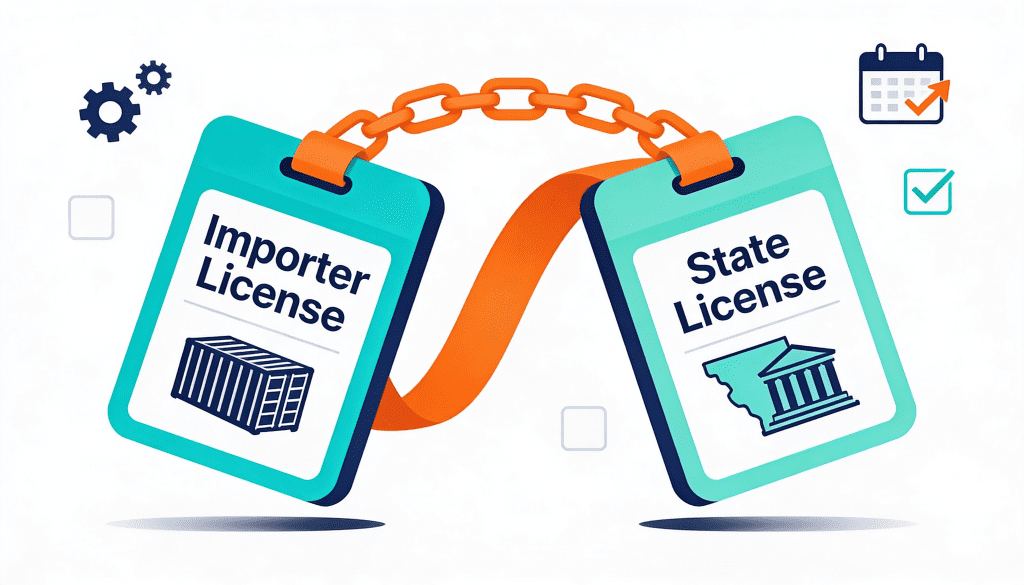
An importer license is what companies bringing finished stuffed articles into the U.S. need in order to sell those products. In some states, these two license types are linked, meaning one has to be active before the other can be renewed. That's where managing licenses independently starts to get complicated.
What It Means to Manage Licenses Outside of GRS
When a license isn't under GRS management, it means one of two things:
- You're renewing directly with the states yourself
- You're working with another service to handle it
In either case, we don’t have access to those licenses through the states; we can only see what's been uploaded to your account.
When a license isn't under our management, we don't receive renewal notices for it, we don't control the deadlines, and we can't act on your behalf with the state when something comes up. That distinction carries a lot more weight than it might seem at first glance, especially when renewal requirements in certain states depend on the status of licenses we can't see or control.
Why Virginia Is a Clear Example of Where Things Can Go Wrong
Virginia has specific renewal requirements that make it one of the more challenging states to navigate when licenses aren't all under one management umbrella.
To renew a Virginia importer license, two conditions have to be met simultaneously:
- The URN issuing license tied to that importer must be active, and a copy must accompany the renewal application
- The Virginia manufacturer's license (VA MFG) linked to that URN must also be active, even though a physical copy of it isn't required to be submitted with the paperwork
Here's what that looks like in practice. Say GRS is renewing a Virginia importer license for URN UT1234CN, and the importer has previously provided a copy of their active Utah issuing license, which is on file. We can submit the VA IMP renewal with that Utah issuing license included but if the Virginia manufacturer's license tied to that URN has lapsed and we don't have visibility into it, the renewal application will be rejected.
That's the main issue. When we're not managing the VA MFG license, we don't automatically know whether it's been renewed, which means we're submitting renewal paperwork without being able to confirm that one of the conditions for approval is actually met.
If that connected license isn't active, the renewal gets kicked back. And from there, you're looking at delays, potential late fees, and the additional work of correcting and resubmitting everything from scratch.
Virginia is one of the clearest illustrations of how a gap in management can turn a routine renewal into a genuinely complicated situation.
The Broader Risks of Self-Managing URN Licenses
The Virginia scenario is specific, but the underlying risks of managing licenses outside of GRS extend well beyond any one state.
When GRS isn't handling your renewals, a range of issues can surface depending on the circumstances:
- Delayed renewals — without our automated notification system and a dedicated team tracking your deadlines, renewal windows can slip by before anyone catches them
- Lapsed licenses — a missed renewal can mean your products are no longer legally sellable in certain states until the license is reinstated
- Rejected applications — as with the Virginia example, missing or inactive connected licenses can cause renewal submissions to be turned away entirely
- Late fees — most states charge penalties for renewals submitted after the deadline, and those costs accumulate quickly across multiple licenses
- New registration instead of renewal — in some cases, a lapsed license can't simply be renewed and has to be treated as a brand-new registration, which takes more time and costs more money
- Potential violation fees — if your products are on retail shelves while a license is lapsed, you're at risk of in-store violations and the fines that come with them
When GRS is managing your licenses, our team sends out multiple communications to collect sales data and invoice payments well ahead of due dates, so deadlines don't sneak up on anyone. And if a late fee or violation occurs as a result of an error on our end, we cover it — that's part of what the Guaranteed Compliance plan is built around.
The Simplest Fix: Letting GRS Take Over Management
Not to put too fine a point on it, but the most straightforward solution is transferring management of your URN licenses to GRS.
Once we're managing your licenses, we gain direct access to the state information, receive renewal notices on your behalf, and have full visibility and control over the renewal timeline. The disconnects that create situations like the Virginia rejection scenario don't exist when everything is under one roof.
If transferring full management isn't something you're ready to do right now, there are a few steps you can take to reduce your risk in the meantime:
- Upload your URN issuing license to your importer table in your GRS account. There's a dedicated slot for it, and having it on file means we can reference it when renewal time comes around
- Provide copies of any connected licenses, including your Virginia manufacturer's license if that applies to your situation so our team isn't working without key information when we submit your renewal paperwork
- Stay responsive when our team reaches out. When we contact you for information ahead of a renewal deadline, prompt communication makes a significant difference in keeping everything on track
These steps reduce the risk meaningfully, but they're a workaround rather than a real solution. When something changes with a connected license and we don't hear about it in time, the same gaps can still open up. The cleaner path is having GRS manage the licenses directly so those gaps don't exist in the first place.
What GRS License Management Looks Like
GRS offers three tiers of Monitored Services, each designed to give you a different level of support depending on what your business needs. The two higher tiers — License Management and Guaranteed Compliance — are where our team manages the entire renewal coordination process for you.
With either of those plans, GRS receives renewal notices directly from the states, submits your paperwork and payments on your behalf, and acts as your in-house liaison with state officials if anything needs to be addressed or corrected.
With the Guaranteed Compliance plan, GRS also takes on financial responsibility for any penalties or violations that result from errors on our end, including late fees. It's the most comprehensive option available, and it's the one that removes the most risk from your plate entirely.
If you've been managing your licenses independently and you're not sure whether your renewal process has any of the gaps described in this post, it's worth taking a closer look before your next renewal cycle comes around, especially if you're holding a Virginia importer license or any other license with state-specific dependencies.
Learn more about our monitored services!
Bringing It All Together
Managing your own URN manufacturer licenses creates real gaps in the renewal process that can affect your compliance standing, trigger unexpected fees, and put your products at risk of being pulled from retail shelves. States like Virginia make those gaps especially visible, because their renewal requirements depend on the status of connected licenses that GRS can't see or act on unless we're managing them.
Bringing your licenses under GRS management closes those gaps without adding to your costs, and it means you've got a dedicated team tracking your deadlines, handling your paperwork, and making sure nothing falls through the cracks so you can put your attention on running your business rather than worrying about whether your next renewal is going to come back rejected.
If you've got questions about your current setup or you'd like to explore what management would look like for your specific licenses, we're happy to help!
Retail Compliance for Stuffed Articles: Protect Your Holiday Sales From Supplier License Lapses
How Stuffed Article Compliance Really Works: Inside the Product Regulation Process
Want the latest articles and events delivered to your inbox?

Navigate
Services
Services
Stay in Touch
Sign up for Updates