
Go Back
Industry News and Updates
ICPHSO 2026: Yoga Mats, Keychains, and What This Year’s Conference Revealed About State-Level Compliance
Every year, ICPHSO brings together the sharpest minds in product safety and every year, the conversations that happen in the hallways turn out to be just as valuable as the ones on the main stage. This year was no different.
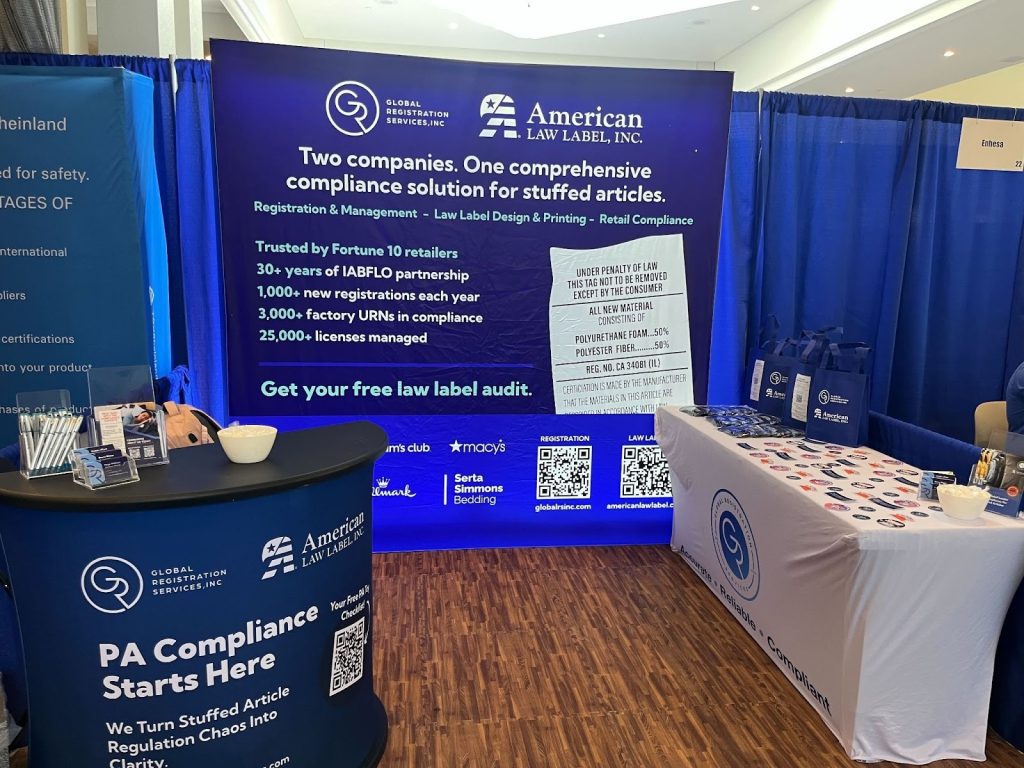
Between the roundtables and reconnections, a few specific compliance questions kept coming up again and again. Two of them — North Carolina's rules around uncovered foam products like yoga mats, and Pennsylvania's classification of keychain stuffed toys — are worth addressing directly, because if you were asking those questions at the conference, you're probably not alone.
Here's a breakdown of what we heard, what the answers are, and a few reflections from GRS’s Vice President, Deven Wisner, on what this year's conference meant to him.
North Carolina, Uncovered Foam & Yoga Mats
One of the most frequent topics our operations manager, Paige Wellman, fielded at this year's conference was North Carolina's rules around uncovered foam products and specifically, how yoga mats fit into that picture.
North Carolina regulates bedding and upholstered furniture products, and the question of what qualifies — and what doesn't — trips up a lot of manufacturers. Uncovered foam is a category that requires careful attention. Whether a product like a yoga mat falls under NC's regulatory umbrella depends on how it's classified, how it's marketed, and the specific materials involved.
This isn't a new area of confusion. We've written about North Carolina's product regulation landscape before, and the state has been working through some clarifications of its own. Our post on North Carolina product regulation clarification and expected account changes is a good starting point if you're trying to get your bearings.
If you sell foam-based products and aren't sure whether you need a North Carolina license, this is exactly the kind of question our compliance specialists handle every day. GRS's monitored services are designed to keep manufacturers ahead of these kinds of state-specific changes, so nothing slips through the cracks.
Pennsylvania's "Keychain" Question And Why Classification Matters
The other topic that generated serious buzz? Pennsylvania's classification of stuffed toys and specifically, whether items marketed as keychains or accessories fall under the state's regulatory requirements.
Here's the short answer: PA's classification for stuffed toys covers anything with playable value. Items that are genuinely marketed as accessories or keychains — not toys — are not regulated under that framework. We discussed this directly with state representatives, and the guidance is clear on that point.
That said, there's a nuance worth knowing. If the factory manufacturing your stuffed keychain already holds a PA URN for stuffed toys, and that URN is also registered in Massachusetts and Ohio, you can use it on the product in question. You may already have what you need, it's just a matter of verifying what's already in place.
Pennsylvania has become something of a focal point in broader product safety conversations right now, and for good reason. The state's approach to toy testing and stuffed product regulation is more detailed than many manufacturers expect. If you're selling stuffed goods and aren't sure where your products land, read up on Pennsylvania's new covering testing requirements for stuffed products
Our Vice President’s Reflections on ICPHSO 2026
GRS Vice President Deven shares what stood out to him this year.
The Mentorship Program
Of all the hats I wear in this industry, serving as Co-Chair of the ICPHSO Annual Mentorship Program remains one of the most rewarding. This program is a deliberate, strategic investment in the future of the product safety profession. And watching mentees engage with mentors, ask hard questions, and leave with renewed confidence in their career paths is a reminder of why we do this work.
I'm incredibly grateful to work alongside my Chair, Sara Bakken of Target, whose leadership and commitment to this program are second to none. And none of this would exist without the vision of the inaugural chairs who built it from the ground up: Mark Fellin of Spin Master and Keith Rhoades of Intertek. The seeds they planted continue to grow, and the mentorship community they created is genuinely thriving.
The field of product safety is complex, demanding, and critically important. It needs talented, well-supported people to carry it forward and this program is one of the ways we make sure that happens.
Relationships
Beyond the formal programming, ICPHSO is simply one of the best gatherings in our industry for the people. There's something irreplaceable about being in a room with colleagues who speak your language — who understand the nuances of standards, testing, compliance timelines, and the very real stakes of getting product safety wrong.
This year brought the usual joy of reconnecting with long-time colleagues, clients, and partners, alongside the energy of meeting new faces entering the industry. These relationships are the backbone of what makes ICPHSO worth showing up for, year after year.
What This Year's Conversations Revealed
If there was one theme that cut across nearly every conversation at this year's conference, it was the growing complexity of state-level product safety regulation. The patchwork of requirements across jurisdictions is real and for manufacturers managing high SKU volumes or navigating unfamiliar states, the margin for error is low.
Pennsylvania dominated a lot of those discussions, but the underlying challenge is broader: understanding the specific contacts involved, knowing the varying formats in which data is requested, and making sure the right information reaches the right people in the right way. For many brands, that's genuinely hard to do alone.
It's exactly the kind of challenge GRS was built to solve. The conversations at ICPHSO this year only reinforced what we already know: the need for expert guidance in multi-state compliance has never been greater. If you walked away from the conference with open questions — about NC foam products, PA toy classification, or anything else — we're here to help.
Missed last year's ICPHSO recap? Check out our2025 conference post for a look at what the conversation looked like then — and how much the landscape has continued to evolve.
What Pennsylvania’s New Covering Testing Requirement Means for Your Stuffed Products
Sales Reporting in the GRS Portal: A Step-By-Step Plan & The Button Many People Miss
Want the latest articles and events delivered to your inbox?

Navigate
Services
Services
Stay in Touch
Sign up for Updates